The latest episode of Birthday Adventure 2024 had us diving into more history as we explored the British Museum’s fascinating antiquities.
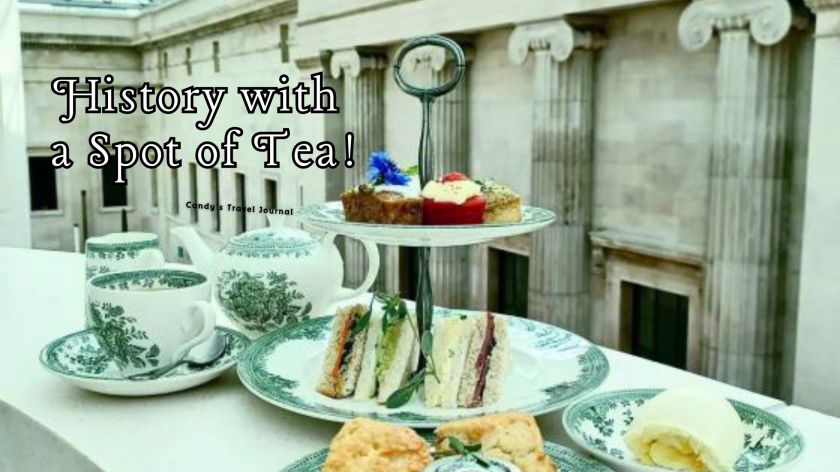
The show’s star, however, was the indulgent Afternoon Tea experience at the elegant Great Court Restaurant.
After an awe-inspiring ride on the London Eye, Laura, Maria, and I hopped back on the tube and made our way to Great Russell Street. This was the start of our scholarly journey to explore the first public national museum that encompassed all fields of knowledge.
While admission to the museum is free of charge, all visitors must reserve their tickets and choose a specific time slot for their visit. This reservation system is in place to control the number of people inside the museum at any given time, ensuring a safe and enjoyable experience for all visitors.
It was quite apparent to distinguish between visitors who had done their research and those who hadn’t. A lot of visitors seemed surprised by the presence of a queue, as the museum is free to enter. Their stunned expressions upon being informed about the requirement of a ‘ticket’ were absolutely priceless.
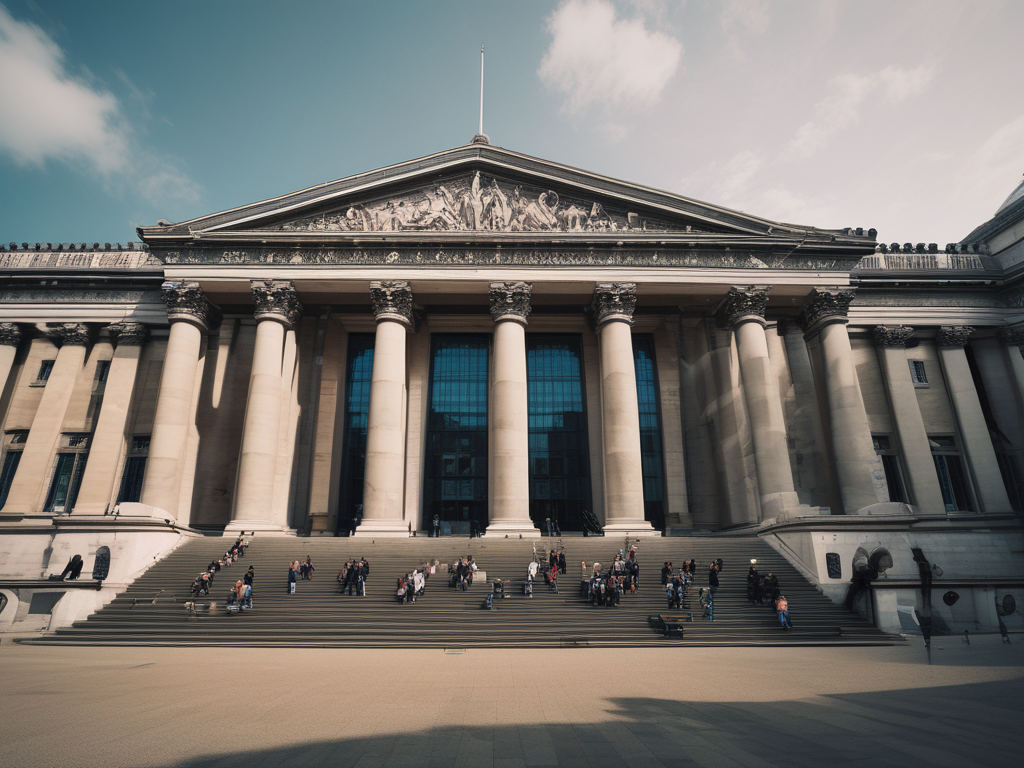
After having our tickets scanned and completing the security check, we entered through the grand Greek Revival façade main entrance. The majestic entrance bore a striking resemblance to the structures of Athens’ Acropolis.

I can’t wait to see the Acropolis once more with my own eyes.
As with our adventure to the National Museum of Scotland, some items topped our ‘must-view’ list. These included the Elgin Marbles, the Egyptian mummies, and the Parthenon sculptures.
Number one was the Rosetta Stone.
ROSETTA STONE

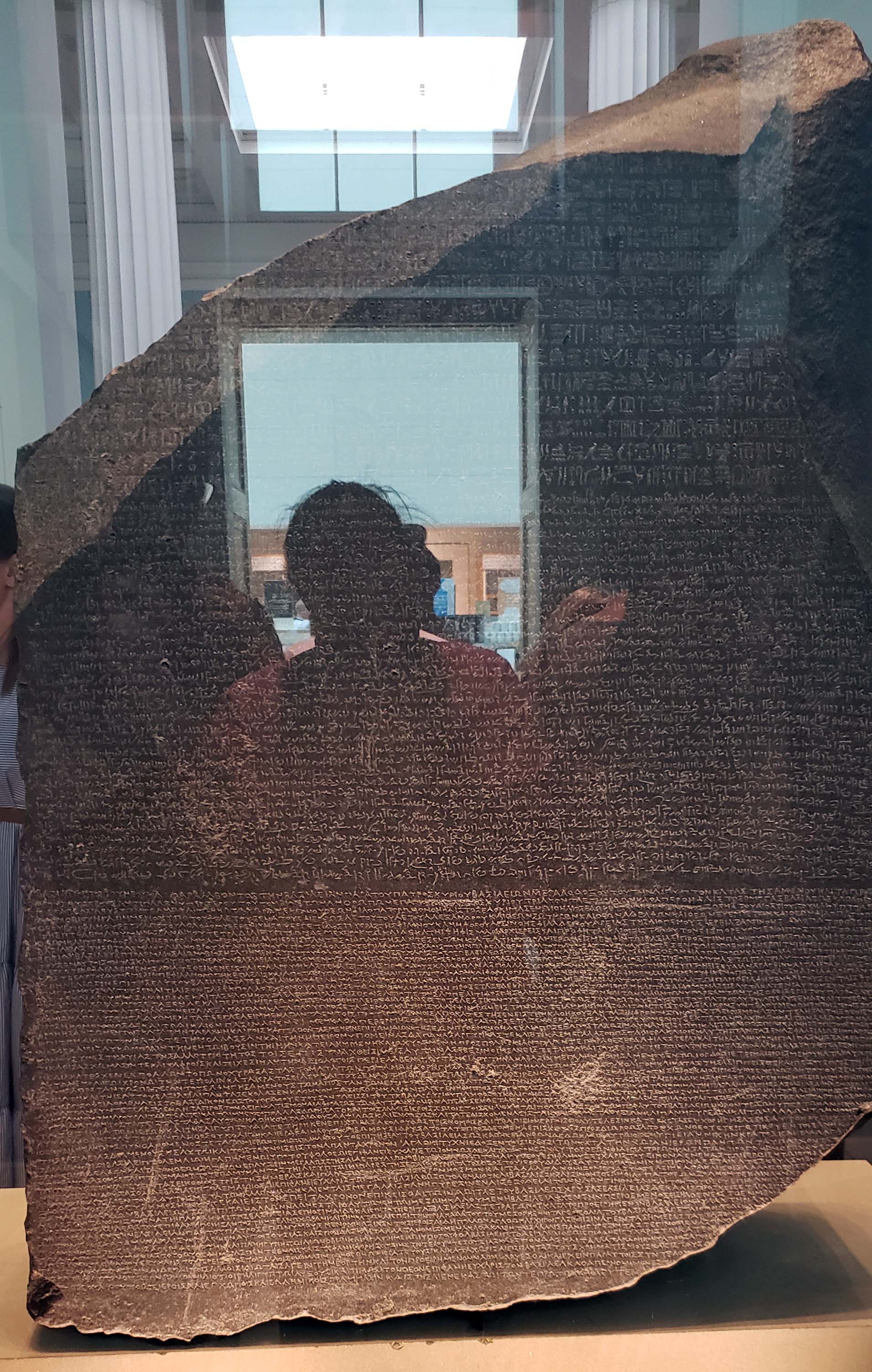
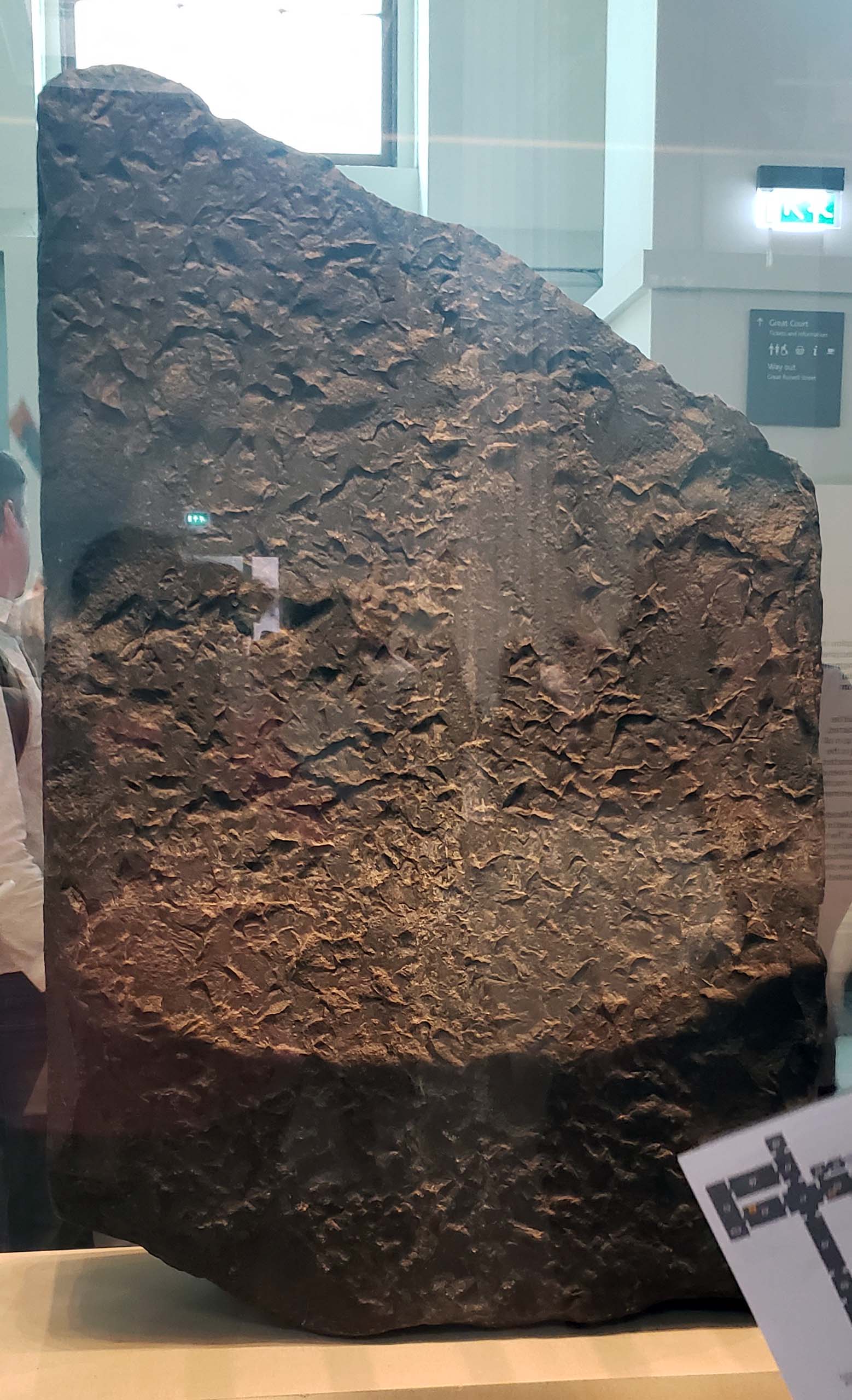
Laura, our resident ancient history guru, enlightened us about the immense importance of the Rosetta Stone. I was mesmerized by the sheer size of the stone and the incredibly detailed inscriptions adorning its surface.
I didn’t want to dampen Laura’s joy by revealing that I already knew the history of the Rosetta Stone. After all, she had never spoiled my excitement when I delved into the history of England and the British Royal family. I simply reveled in our shared joy of learning and sharing knowledge.
Laura eloquently detailed the remarkable discovery of the Rosetta Stone, highlighting the inscription of the same text in three different scripts: hieroglyphs, Demotic, and Ancient Greek. This groundbreaking finding, made in 1799, presented an unprecedented challenge — the decipherment of ancient Egyptian hieroglyphs.


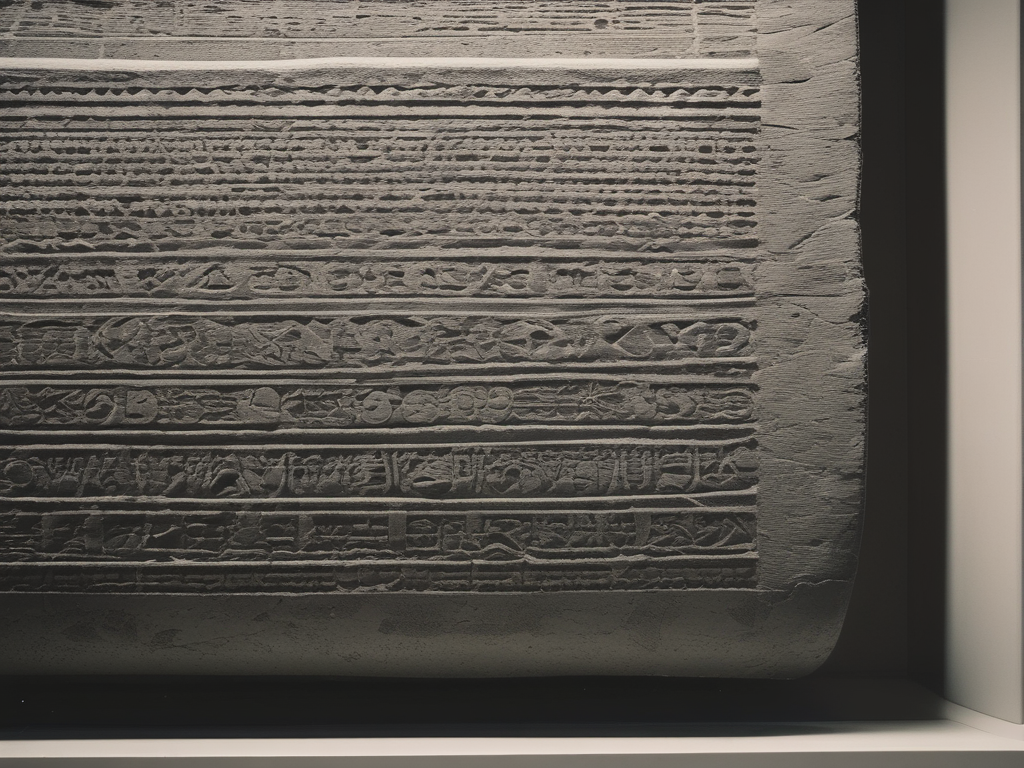

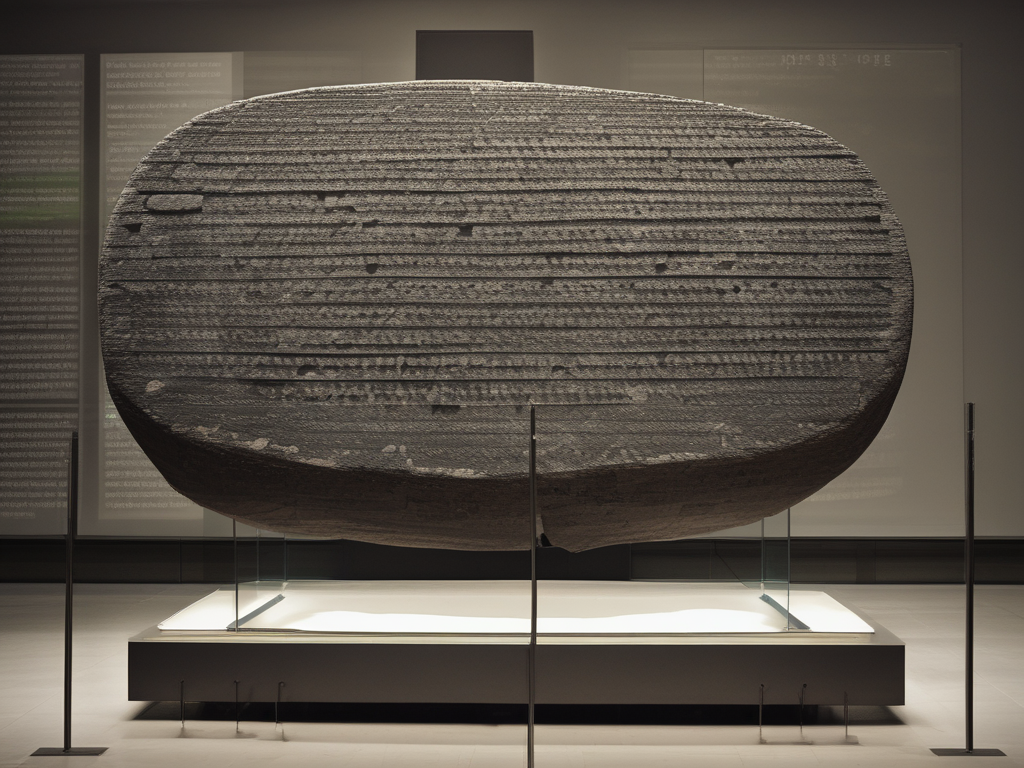
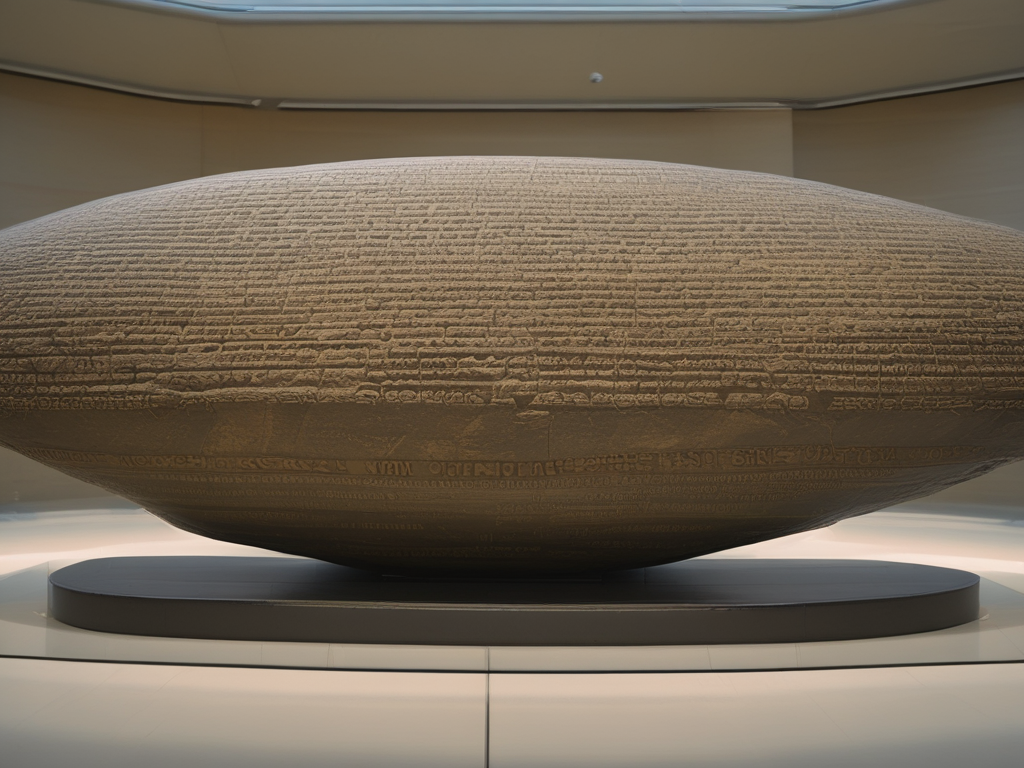
However, the presence of identical text in Ancient Greek provided a critical breakthrough for scholars, as it served as the key to unraveling the mysteries of the hieroglyphs. This pivotal moment unlocked the secrets of an ancient civilization and revolutionized the study of ancient languages and cultures.
The ancient stone has been a prized exhibit at the museum for over two centuries, arriving in 1802 and only being relocated once during the tumultuous years of World War I. During this time, it was temporarily housed in a station on the Postal Tube Railway, resting 50 feet beneath the bustling streets of Holborn.
Laura’s story was intriguing, but seeing the Rosetta Stone up close would add a whole new dimension to her narrative.
As we marveled at the vastness of the British Museum, we found ourselves faced with a dilemma. The museum was so vast that we didn’t want to waste any of our precious exploration time.
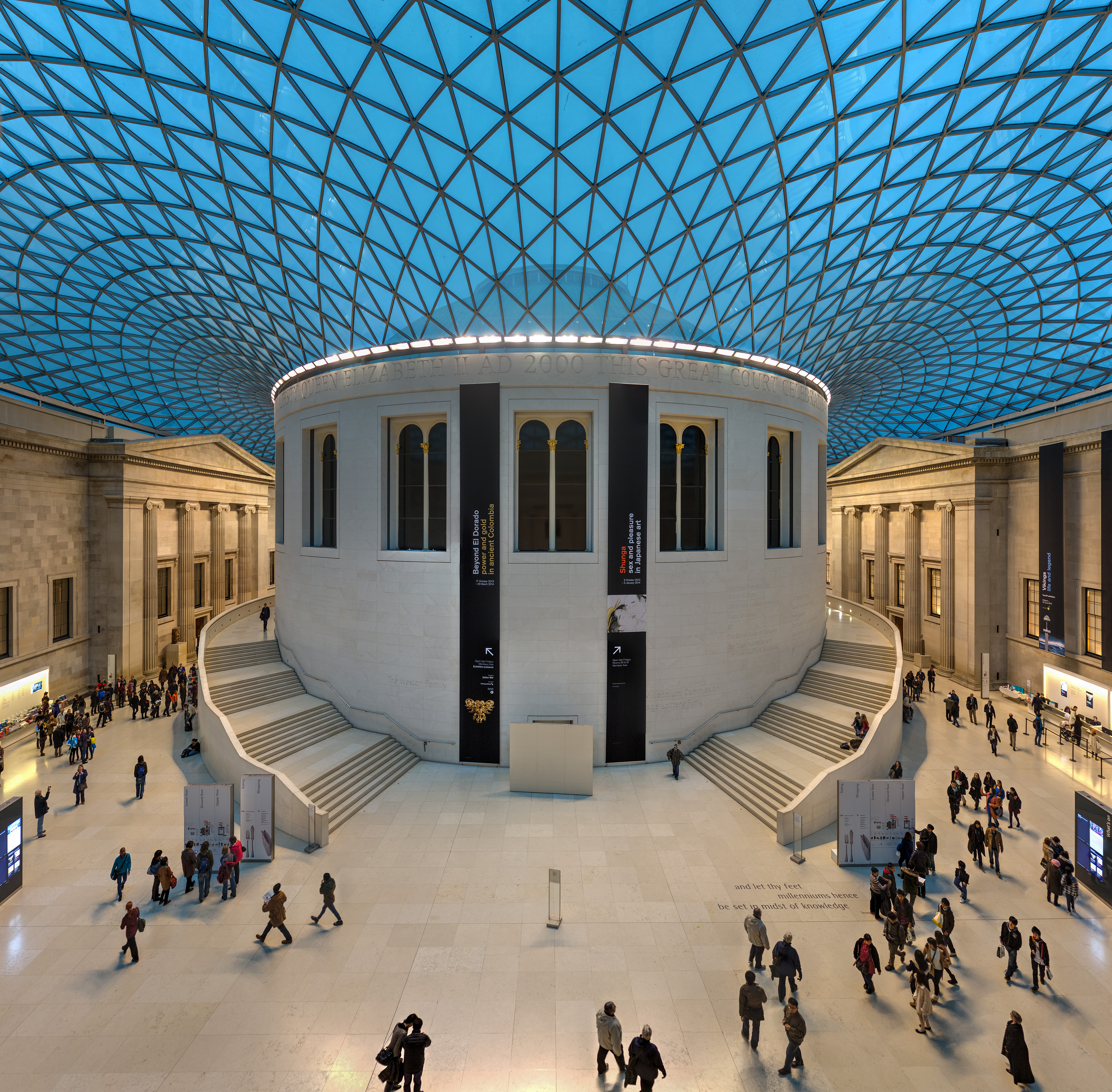
To ensure we made the most of our visit, we decided to seek assistance from a museum employee at the information desk. The goal was simple: to discover the exact location of the legendary Rosetta Stone amid the museum’s expansive collection.
Her response – “Around the Great Court.” That was it. Nothing more.
Why was this such an insignificant direction? The Queen Elizabeth II Great Court, its official name, is two acres — that’s 87,120 square feet of area. This place is the largest covered square in Europe!
Guess what we did?
Yes, we went “around the Great Court.”
We spent 15 minutes walking around two acres. Yes, admiring the architecture and the other exhibits was fabulous, but we still hadn’t found where the stone was located. We asked another museum representative, and he guided us to the correct gallery.
Alas, we set eyes upon another important piece of history
LEWIS CHESS PIECES
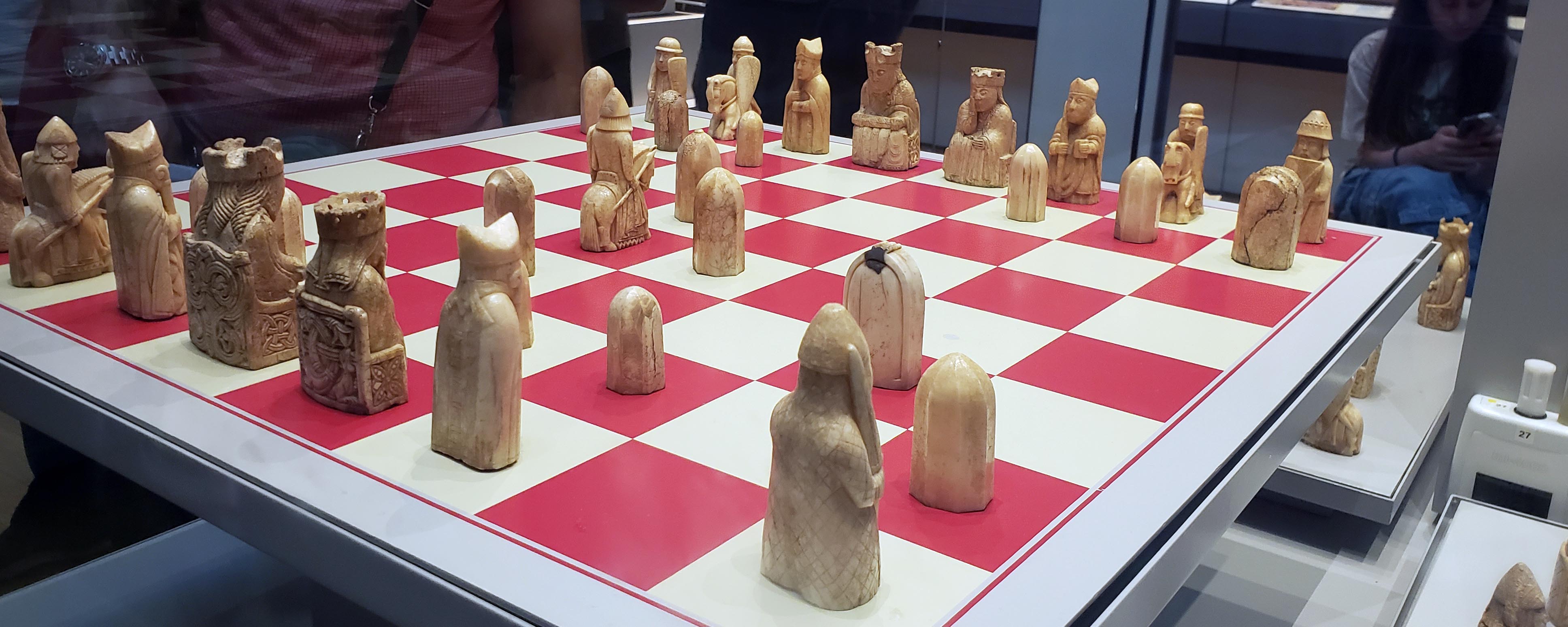
The Lewis Chess Pieces were next on our list. Viewing them at the National Museum of Scotland was exciting. Seeing them at the British Museum completes the set.

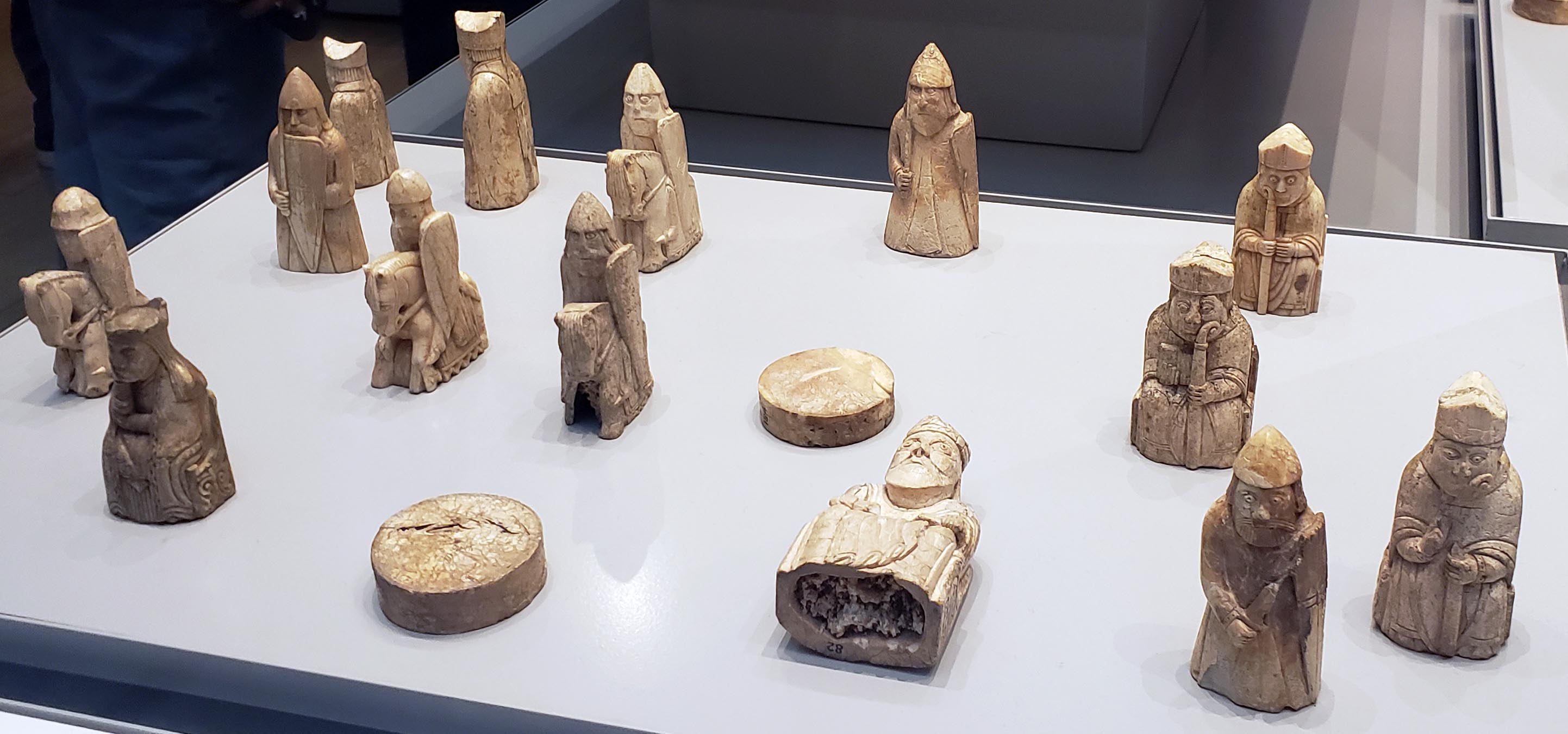
Laura shared a fascinating mystery about the chess pieces. They were discovered on the Isle of Lewis in Scotland, but their origin and journey to Scotland remain a puzzle. The Lewis Chessmen, among the museum’s earliest acquisitions from medieval Europe, continue to intrigue historians and visitors alike.
What an interesting tale. Now I must stream The Queen’s Gambit, which has nothing to do with the Lewis Chess Pieces. It’s just something to watch on a rainy day.
BENIN BRONZES
Our next quest led us to the Benin Bronzes. These sculptures, including elaborately decorated cast relief plaques, commemorative heads, animal and human figures, items of royal regalia, and personal ornaments, held us in awe.
The Benin Bronzes come from Benin City, the historic capital of the Kingdom of Benin, a prominent city-state in West Africa from the medieval period.
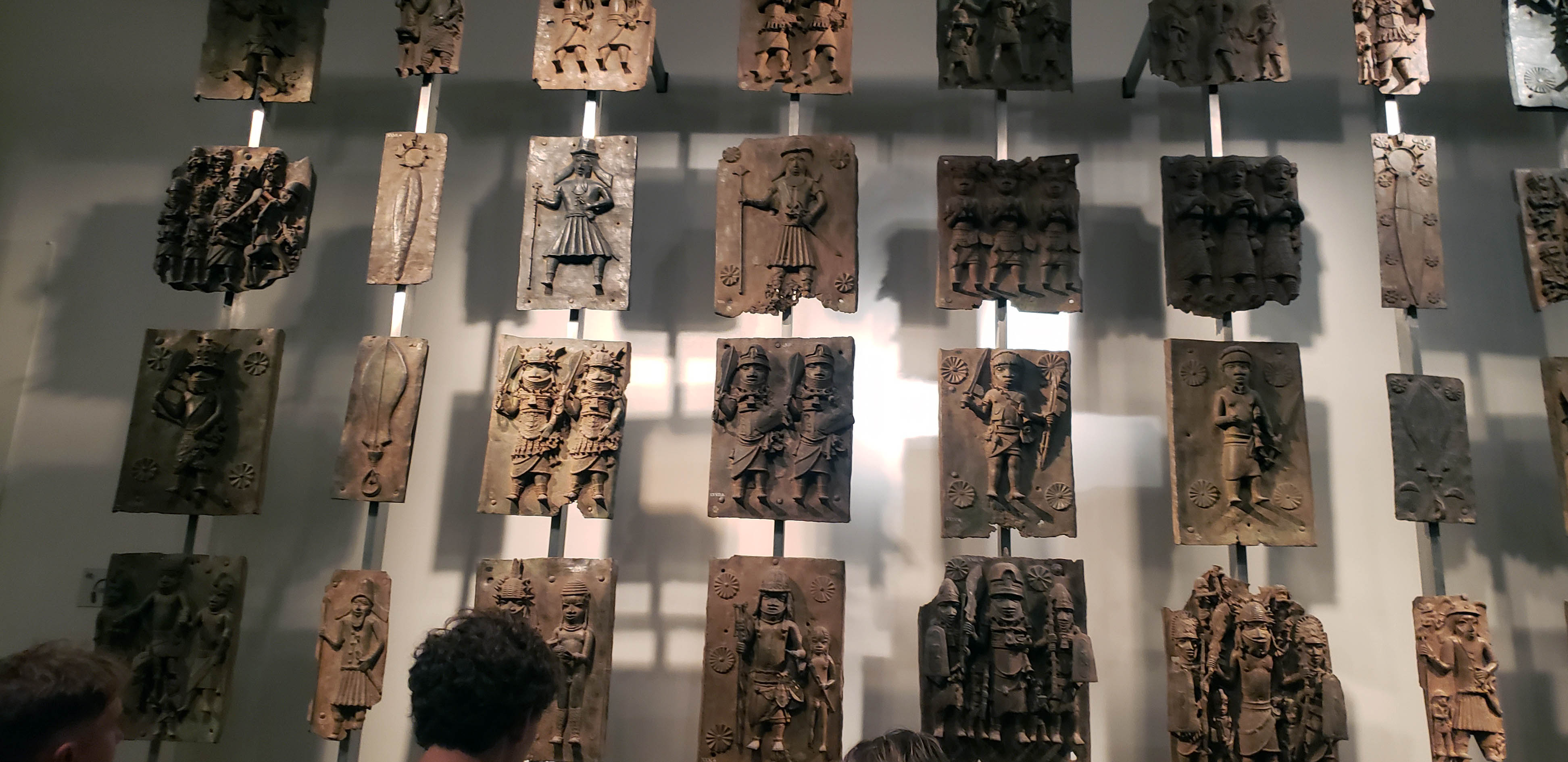
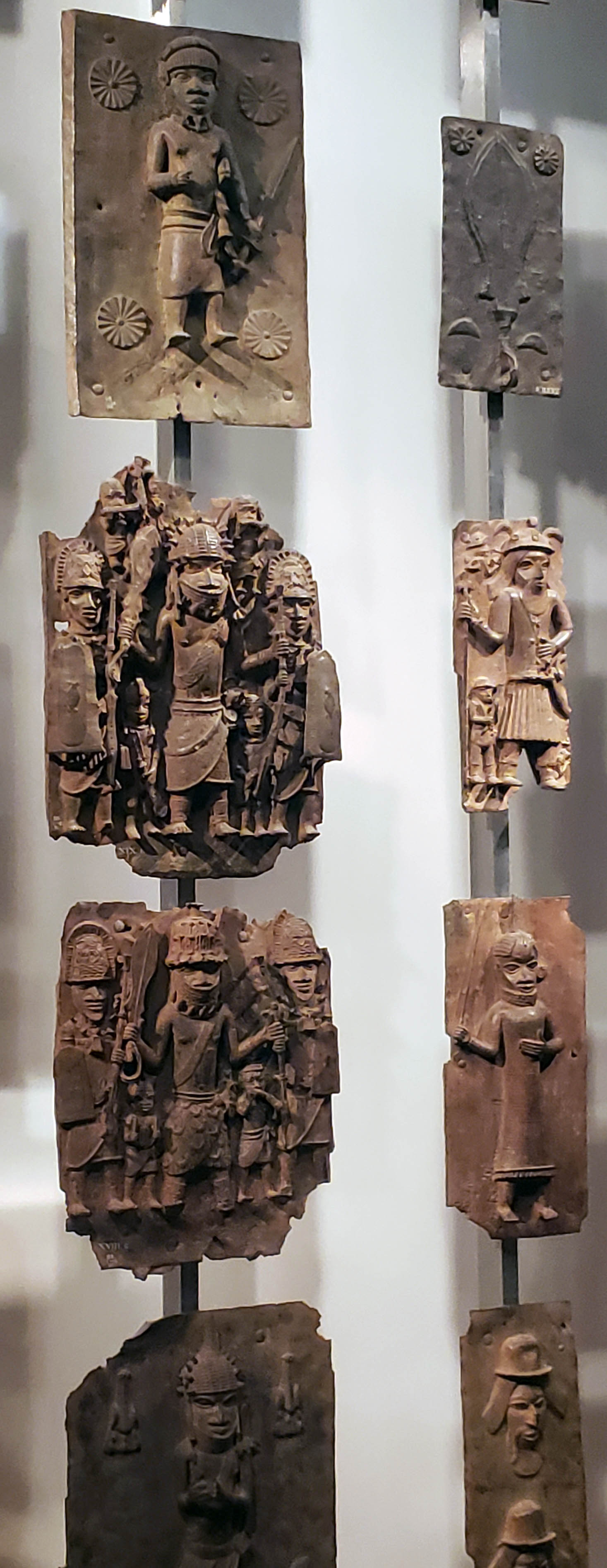


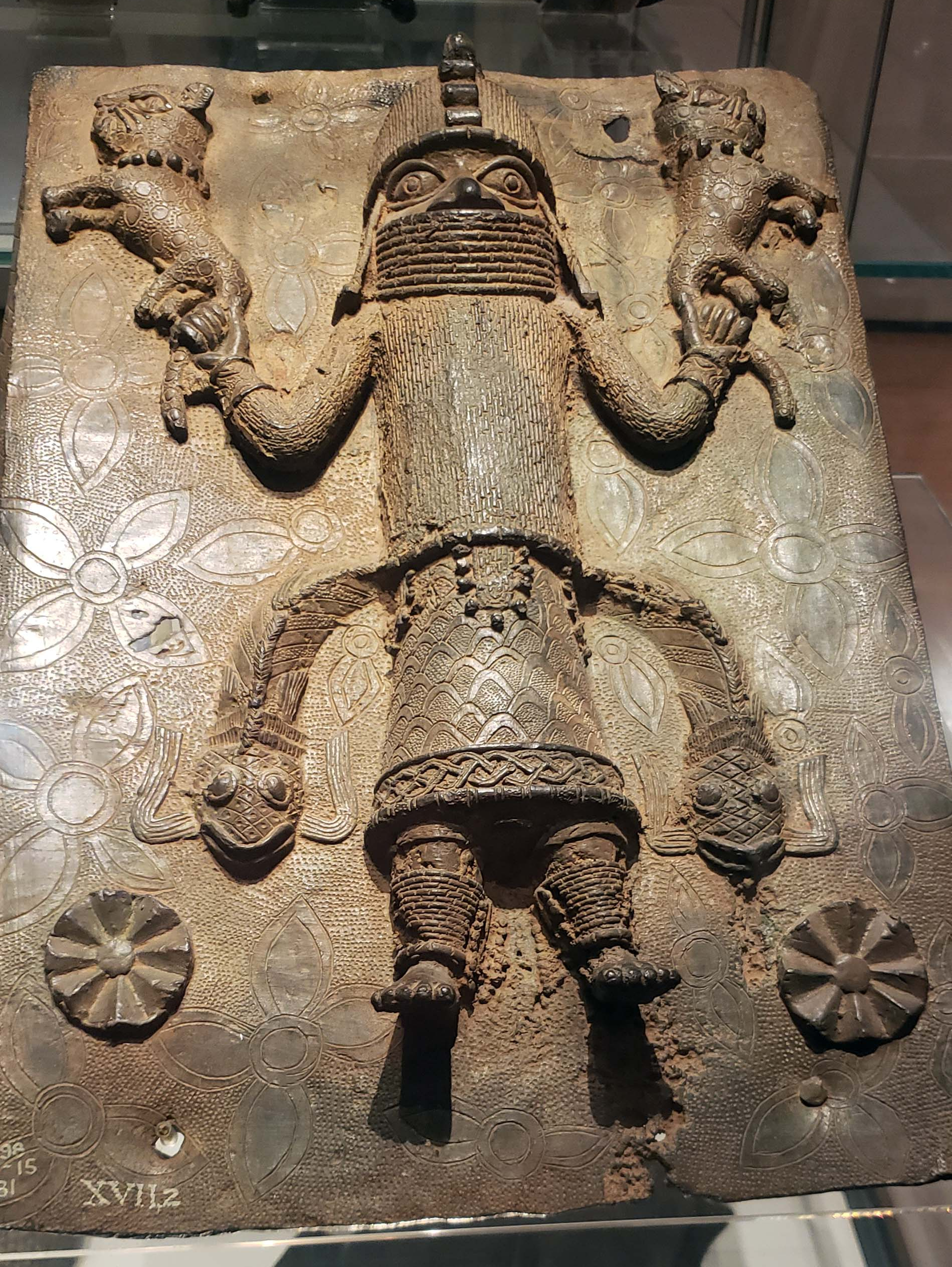
Although the bronzes are spectacular, the ongoing debate about returning them to Benin is fascinating.
This debate is a part of a larger global conversation about the repatriation of cultural artifacts. The story of the Benin Bronzes highlights the discussion on the British Museum holding onto what amounts to the spoils of war and colonization instead of returning them to their rightful owners and/or countries.
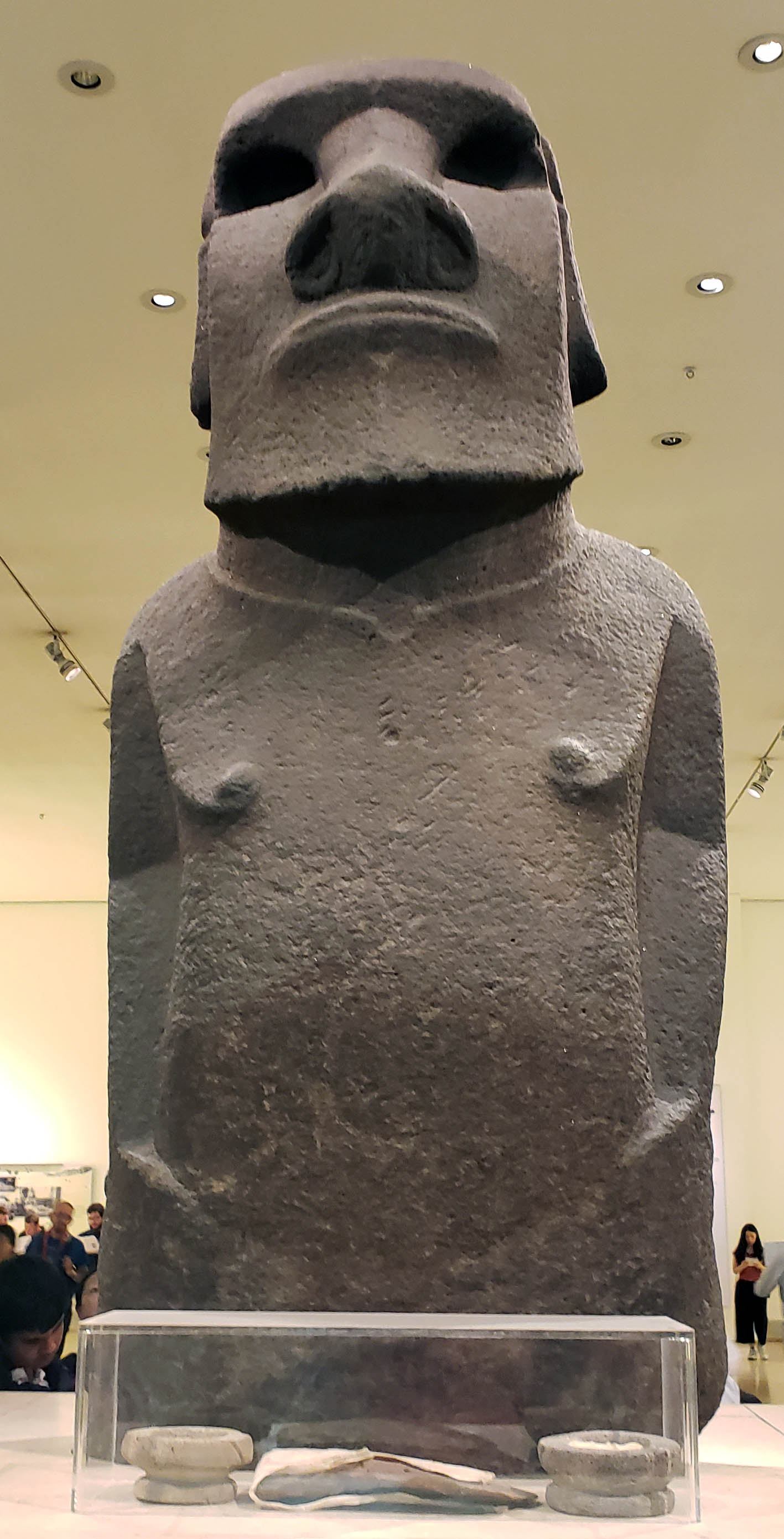

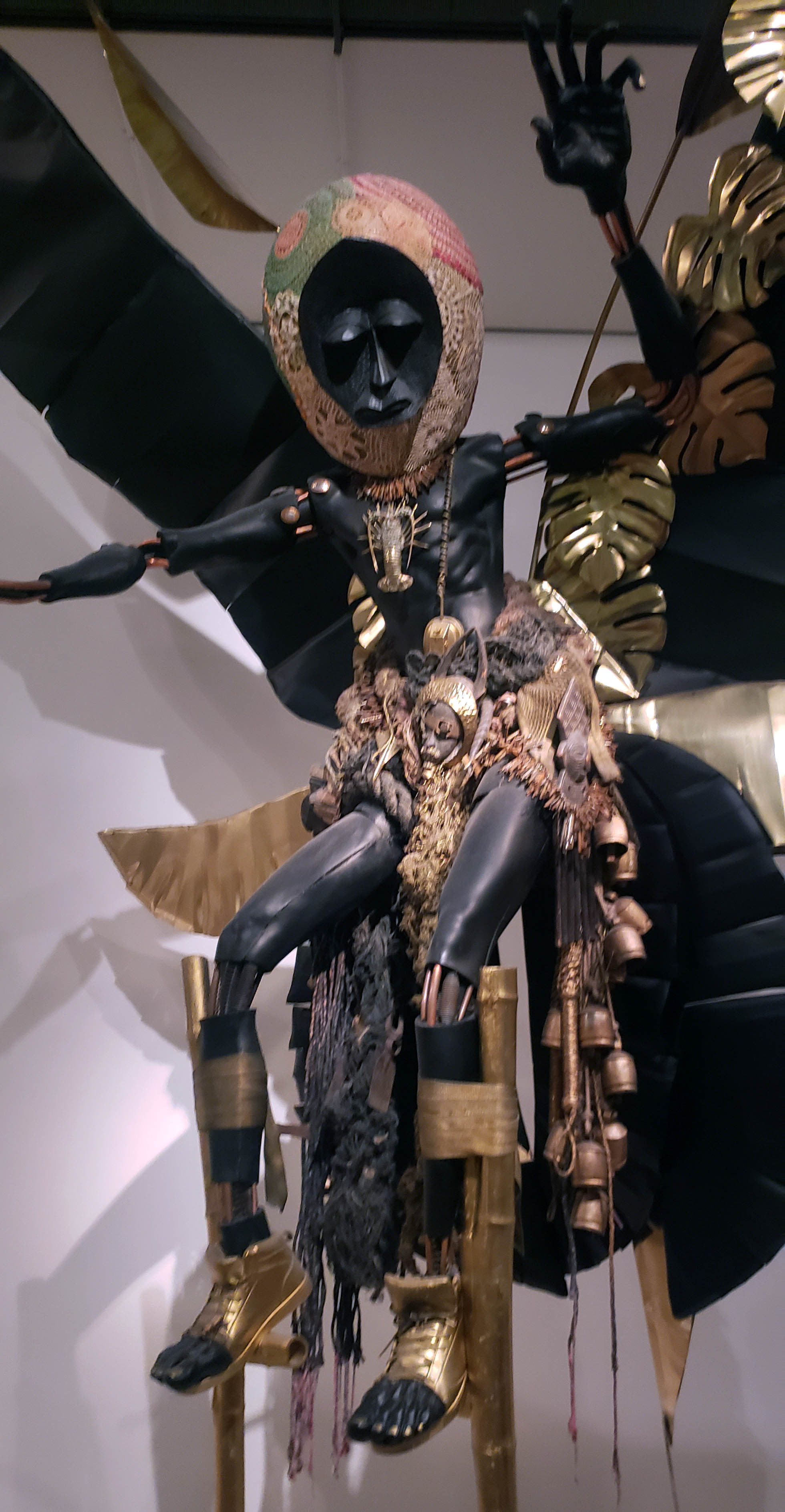
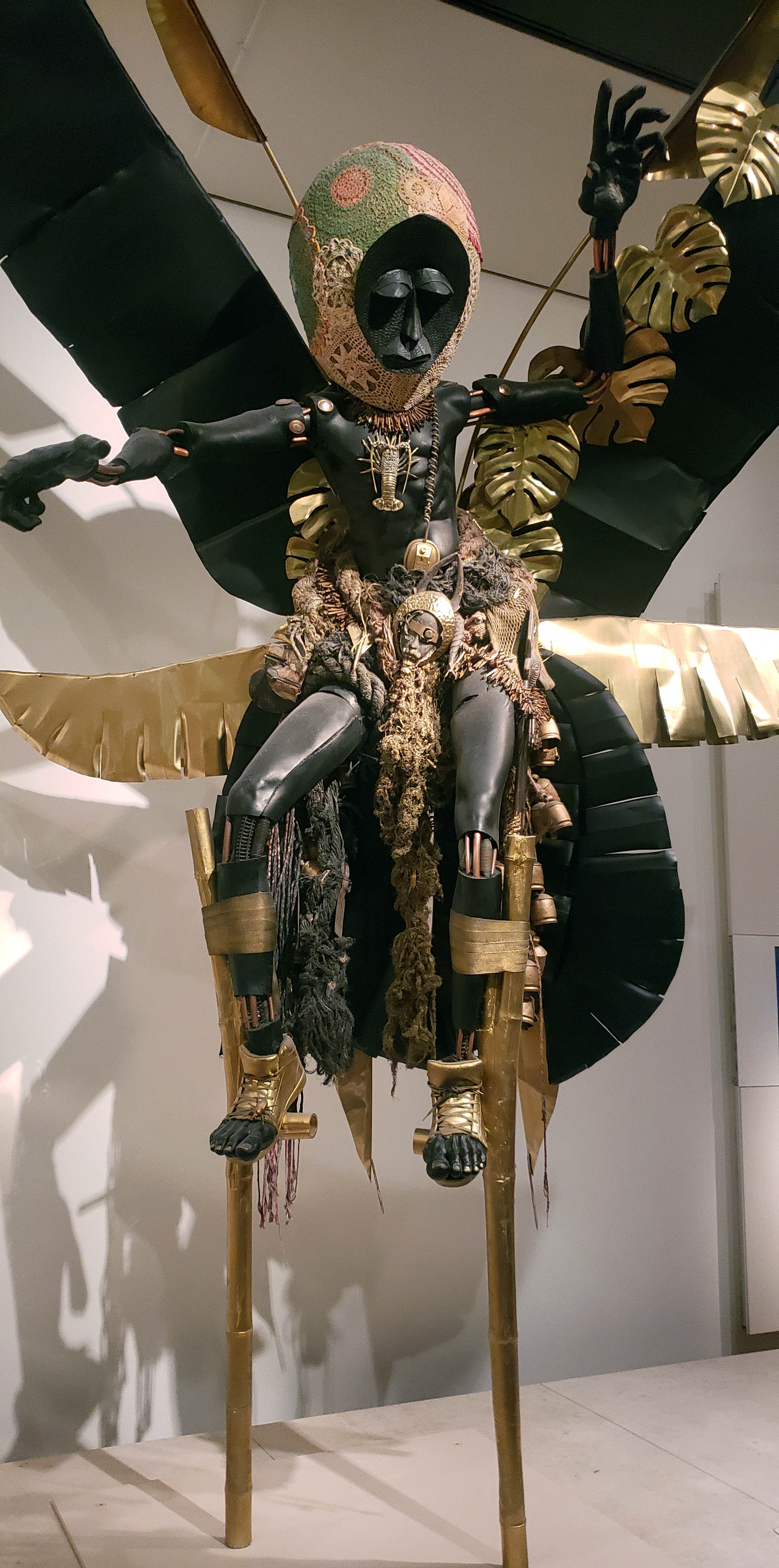

While I understand the museum’s position and desire to preserve these treasures, I also share a hope for a resolution. The Benin Bronzes, which I might never have known about if not for the British Museum, should not be lost to history. I hope the museum can find a way to ensure their preservation, regardless of ownership.
TEA TIME
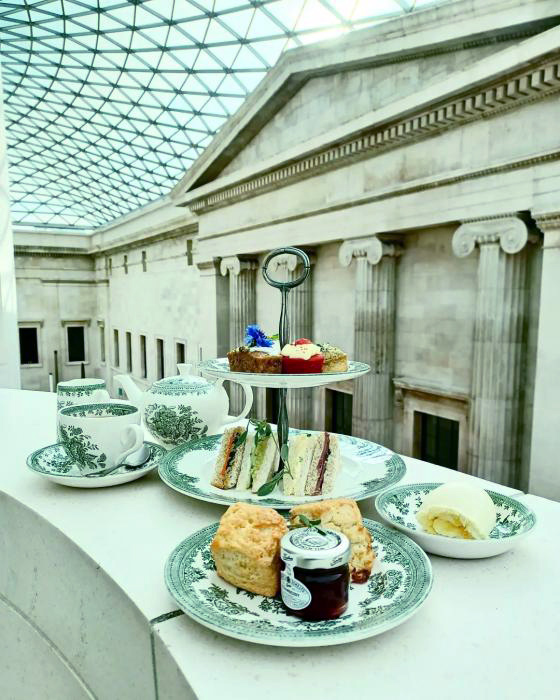
The long-awaited moment finally came — our Afternoon Tea at Great Court Restaurant. The anticipation had been mounting ever since I secured our reservation a month before our adventure.
The alluring scent of the just-out-of-the-oven Somerset farm butter scone, topped with luscious Cornish clotted cream and sweet strawberry jam, was so enticing that it could tantalize anyone’s taste buds.

Now, before we scuffed down the scones, I had to explain the ‘Cream or Jam First’ debate.
According to Devonshire tradition, the clotted cream is spread on the scone first and then topped with jam. On the other hand, in Cornwall, it is customary to spread the jam first, followed by a decadent layer of clotted cream.
The expressions on Laura and Maria’s faces were unforgettable. They gazed at me with such incredulity, their eyebrows furrowed, and their eyes widened as if I were some kind of ten-headed alien creature.
Then, with a hint of frustration in her voice and her hands thrown up in exasperation, Laura shook her head, grabbed a scone and declared, “I’m American. I don’t even know what clotted cream is.”
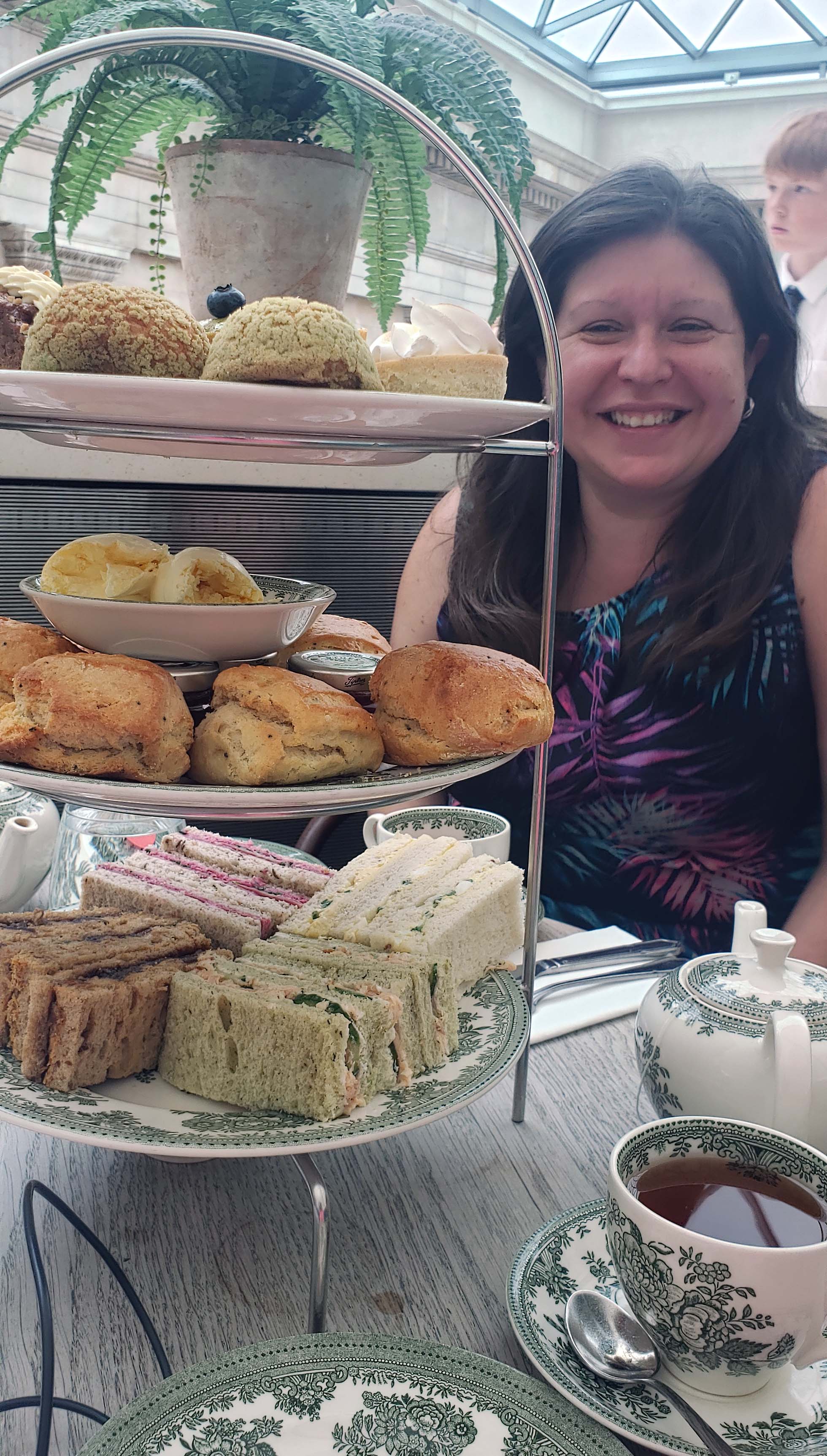
The sandwiches were a true delight, from the succulent roast beef complemented by beetroot horseradish cream cheese to the flavorsome coronation-spiced free-range chicken paired with spinach. Each mouthful was an exquisite explosion of taste.
Each of us indulged in our delightful pot of tea, carefully chosen from a wide array of options to perfectly match our tastes and preferences.
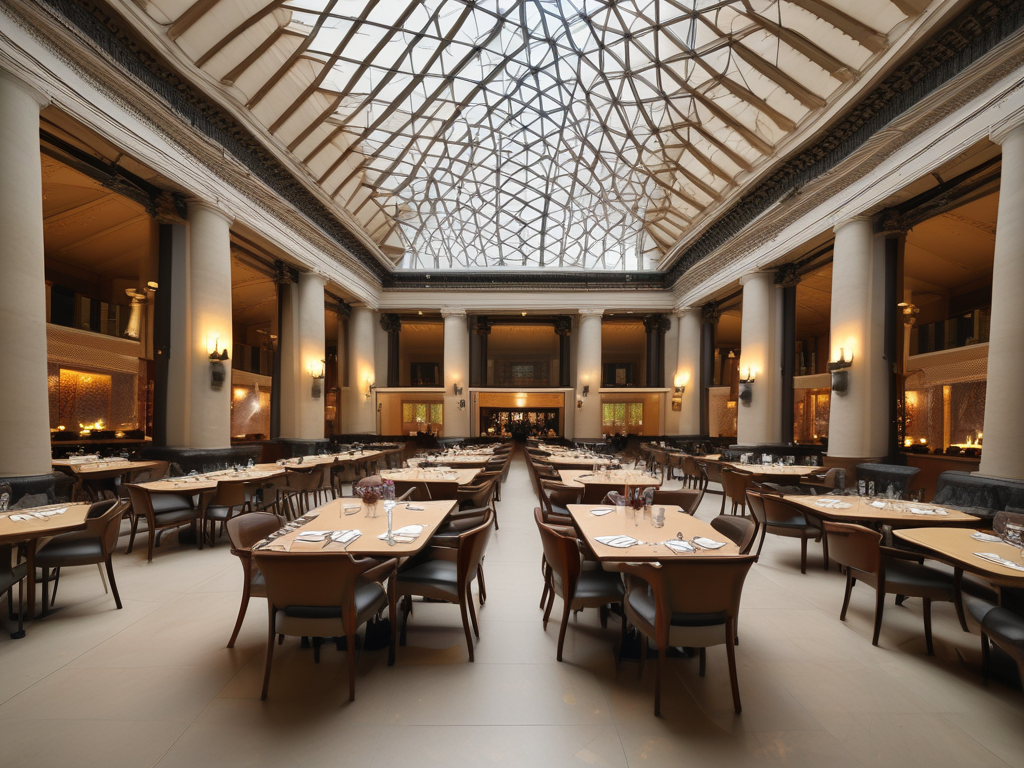
The tranquil and welcoming atmosphere of the restaurant elevated our sensory experience, allowing us to savor every moment of this elegant and delectable culinary journey.
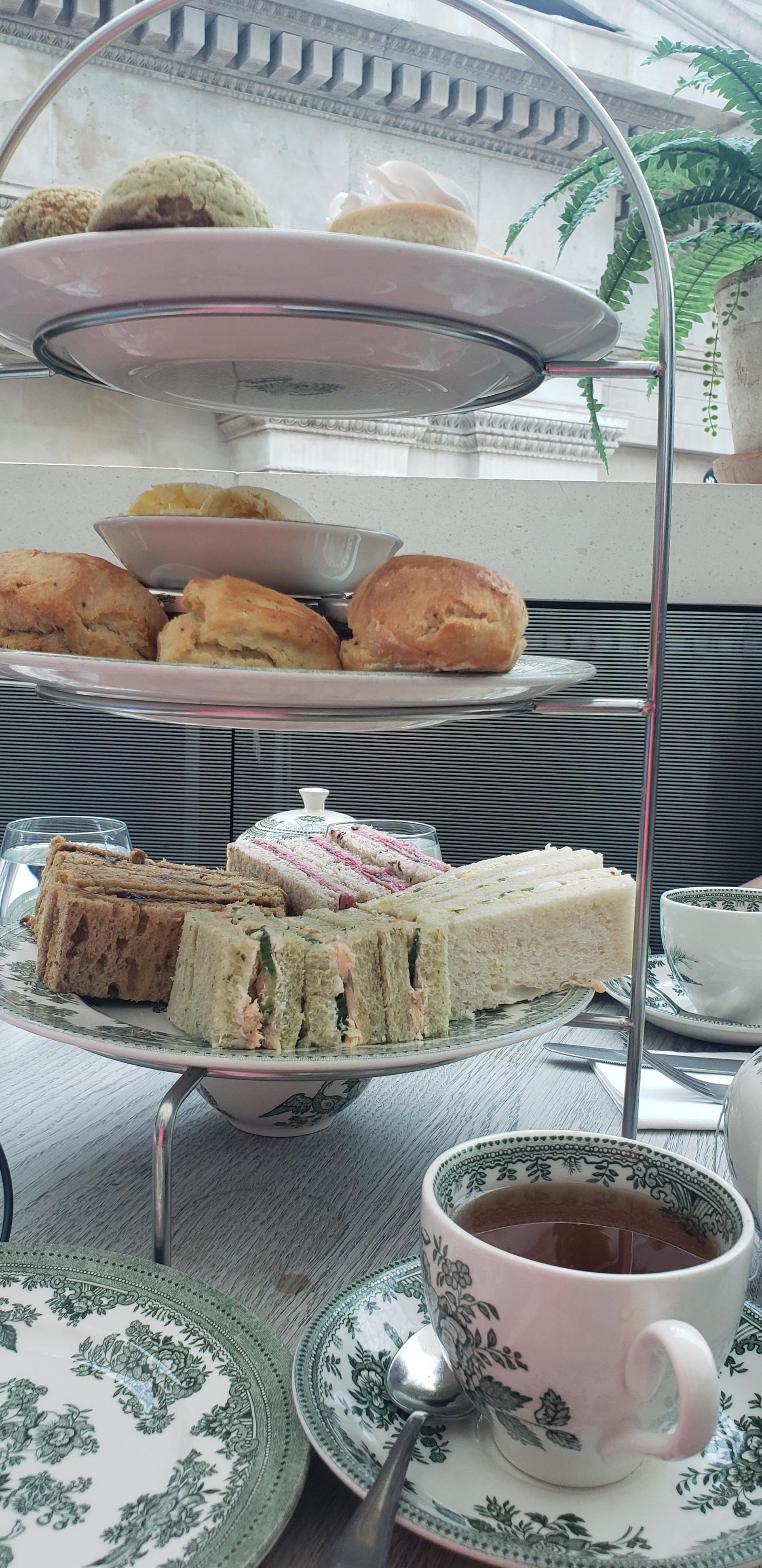

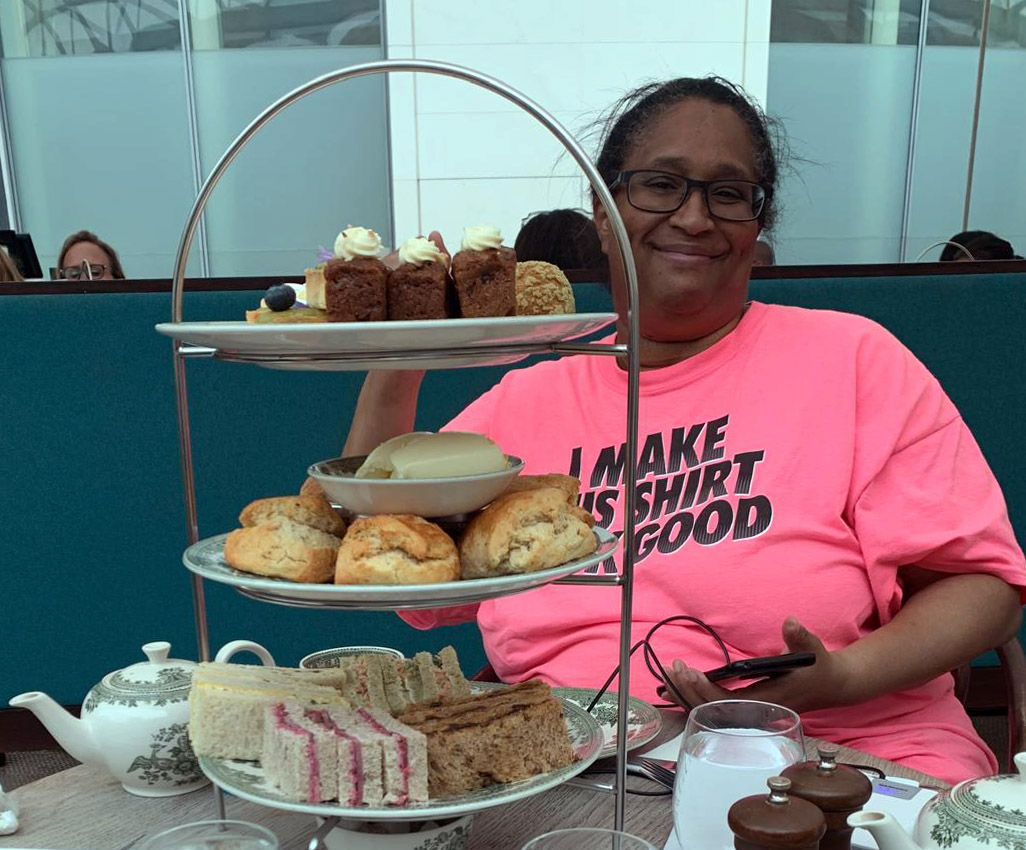
The afternoon tea experience at the British Museum was truly delightful. The elegant ambiance and charming service evoked a sense of timeless grace and sophistication that perfectly complemented the sweetness of the tea and culinary treats.
Despite the indulgence, the age-old question of whether to spread cream or jam first on our scones remained unresolved, adding a touch of silliness to the occasion.
CONCLUSION
After indulging in a delightful afternoon tea, we browsed the museum’s gift shops. The small trinkets only enhanced the beautiful memories of immersing ourselves in a world of captivating history and cultural treasures.
Eager to explore more of London’s rich tapestry, we bid adieu to the museum and embarked on a leisurely stroll through the city’s cobblestone streets.
As we meandered, we were treated to a sensory feast, relishing in the captivating visuals and the symphony of urban sounds that echoed through the air of this iconic metropolis.
ALMOST FORGOT …
Since it was my birthday, we enjoyed dinner my traditional birthday diner — The Hard Rock Cafe. This year, the Hard Rock Cafe London Piccadilly Circus played host!
 Candy Knight's Stories
One comment